
| Introduction to Pure Storage |
| Overview of Pure Storage |
| FlashArray and FlashBlade overview |
| Pure Storage architecture |
| Benefits of all-flash storage |
| Storage concepts: Block, File and Object |
| Pure FlashArray Architecture |
| FlashArray components |
| Controllers and storage media |
| Purity operating system |
| Storage pools |
| Volumes and hosts |
| Host Groups |
| Fibre Channel and iSCSI connectivity |
| Pure Storage Management |
| Pure1 overview |
| FlashArray Management Interface |
| CLI administration |
| REST API overview |
| Monitoring and alerts |
| Capacity and performance monitoring |
| Storage Provisioning |
| Creating storage volumes |
| Host creation and configuration |
| Host Groups |
| Volume mapping |
| LUN provisioning |
| Fibre Channel configuration |
| iSCSI configuration |
| Multipathing |
| Data Protection |
| Snapshots |
| Protection Groups |
| Local replication |
| SafeMode snapshots |
| Backup and recovery concepts |
| Recovery from snapshots |
| Replication & Disaster Recovery |
| Synchronous replication concepts |
| Asynchronous replication |
| ActiveCluster |
| ActiveDR |
| Protection Group replication |
| Disaster Recovery planning |
| Failover and failback |
| Performance Management |
| Performance monitoring |
| IOPS, latency and throughput |
| Capacity management |
| Performance troubleshooting |
| Best practices for workload optimization |
| Pure Storage FlashBlade |
| FlashBlade architecture |
| File and object storage |
| File systems |
| NFS and SMB |
| S3/object storage |
| Data protection and replication |
| Cloud Integration |
| Pure Cloud Block Store (CBS) |
| AWS/Azure integration concepts |
| Hybrid cloud architecture |
| Cloud-based disaster recovery |
| Cloud storage use cases |
| Troubleshooting |
| Connectivity issues |
| Host/LUN access issues |
| FC and iSCSI troubleshooting |
| Performance issues |
| Replication issues |
| Capacity-related issues |
| Logs and alerts |
| Hands-on Labs |
| Configure FlashArray |
| Create hosts and host groups |
| Provision volumes |
| Configure FC/iSCSI |
| Configure snapshots |
| Configure Protection Groups |
| Configure replication |
| Monitor performance |
| Perform recovery and troubleshooting |
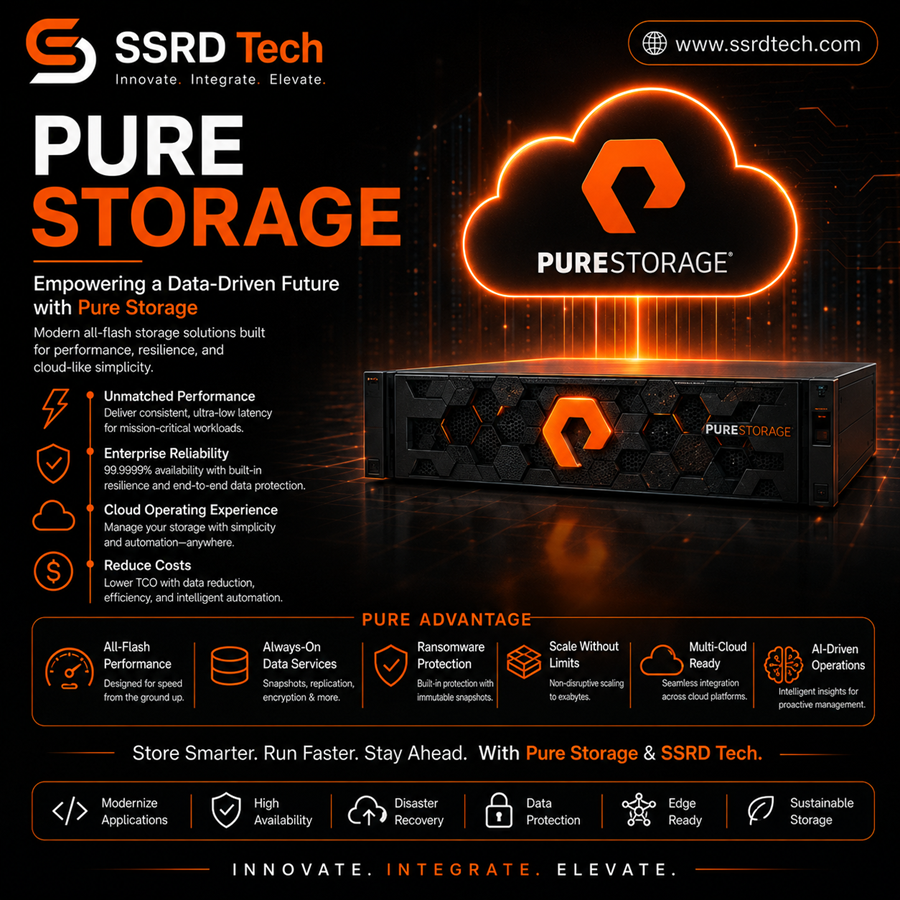
Pure Storage
₹30,000.00
Related products
-
Add to cart
Dell Emc Storage
₹30,000.00 -
Add to cart
NetApp
₹30,000.00 -
Add to cart
IBM storage DS8000
₹30,000.00 -
Add to cart

Hitachi storage
₹30,000.00